


product specs
Flex:
 More Info
Flex
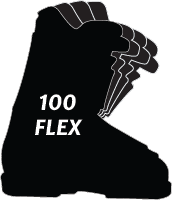
The flex of a ski boot is the measure of force required to bend the boot at the ankle. The stiffer the boot is, the more support it provides. A stiffer boot requires the skier to stand with their weight further forward in order to transfer energy through the boot to the ski effectively. Softer, more forgiving boots are meant for less experienced or lighter skiers. A softer boot requires less energy to initiate the turn of the ski.
Ski boot flex ranges from about 40 (for small children) up to 130 for general consumer boots. An 85 flex is generally a medium stiffness for intermediate women skiers, and a 100 flex is a generally a medium stiffness for intermediate men. Some race boots, categorized as “world cup flex” are measured at 140-170 flex and are built for only the most aggressive skiers. Ultimately, the flex index is not a perfectly succinct measurement across boot brands; it is always best to try a boot on before buying to confirm the flex works well for you.
Moldable Liner:
Yes More Info
Moldable Liner
In recent years, many manufacturers have started building liners that can be custom molded to the skier’s foot using a specialized oven. The liner is heated to soften the inner foam and inserted into the boot shell. The skier then inserts their foot, tightens the buckles and stands in the boots while the liners cool and form to their feet. A heat moldable liner allows for greater fit customization for the skier and ultimately more comfort.
**The liner molding process should always be performed by a qualified boot-fitter with the proper tools. Trying this at home could damage your liners. **
Sole Type:
 More Info
Sole Type
Alpine ISO 5355 - The most common sole type for inbounds skiing, the Alpine ISO 5355 norm is the traditional flat sole style with hard plastic where the boot contacts the binding. Boots with an Alpine ISO 5355 sole are compatible with Alpine, MNC, WTR and GripWalk certified bindings.
GripWalk - GripWalk has become an industry standard sole type over recent years and is often found in alpine specific boots and some hybrid inbound/touring boots containing tech toe and heel fittings. Originally introduced to provide a more natural walking feeling, GripWalk soles feature a more rockered profile. GripWalk boots are compatible with GripWalk certified bindings along with MNC, WTR and touring bindings (provided the boot has tech fittings).

Touring ISO 9523 - The Touring ISO 9523 sole type has tech fittings in both the toe and heel of the boot and a rockered rubber sole for more natural walking. Some Touring ISO 9523 boot soles feature an anti friction device plate that aids in release, but others do not. Boots in this category are compatible with ISO Certified touring bindings and MNC bindings.

Non ISO-Certified - Non ISO-Certified touring boots are built outside the standard norm for Touring ISO 9523, but are compatible with the universal tech (pin) bindings. These boots are only compatible with bindings certified for non compliant touring boots.
Fischer RC4 130 LV VAC BOA
Saleproduct specs
Flex:
More Info
Flex
The flex of a ski boot is the measure of force required to bend the boot at the ankle. The stiffer the boot is, the more support it provides. A stiffer boot requires the skier to stand with their weight further forward in order to transfer energy through the boot to the ski effectively. Softer, more forgiving boots are meant for less experienced or lighter skiers. A softer boot requires less energy to initiate the turn of the ski.
Ski boot flex ranges from about 40 (for small children) up to 130 for general consumer boots. An 85 flex is generally a medium stiffness for intermediate women skiers, and a 100 flex is a generally a medium stiffness for intermediate men. Some race boots, categorized as “world cup flex” are measured at 140-170 flex and are built for only the most aggressive skiers. Ultimately, the flex index is not a perfectly succinct measurement across boot brands; it is always best to try a boot on before buying to confirm the flex works well for you.
Moldable Liner:
YesMore Info
Moldable Liner
In recent years, many manufacturers have started building liners that can be custom molded to the skier’s foot using a specialized oven. The liner is heated to soften the inner foam and inserted into the boot shell. The skier then inserts their foot, tightens the buckles and stands in the boots while the liners cool and form to their feet. A heat moldable liner allows for greater fit customization for the skier and ultimately more comfort.
**The liner molding process should always be performed by a qualified boot-fitter with the proper tools. Trying this at home could damage your liners. **
Sole Type:
More Info
Sole Type
Alpine ISO 5355 - The most common sole type for inbounds skiing, the Alpine ISO 5355 norm is the traditional flat sole style with hard plastic where the boot contacts the binding. Boots with an Alpine ISO 5355 sole are compatible with Alpine, MNC, WTR and GripWalk certified bindings.
GripWalk - GripWalk has become an industry standard sole type over recent years and is often found in alpine specific boots and some hybrid inbound/touring boots containing tech toe and heel fittings. Originally introduced to provide a more natural walking feeling, GripWalk soles feature a more rockered profile. GripWalk boots are compatible with GripWalk certified bindings along with MNC, WTR and touring bindings (provided the boot has tech fittings).
Touring ISO 9523 - The Touring ISO 9523 sole type has tech fittings in both the toe and heel of the boot and a rockered rubber sole for more natural walking. Some Touring ISO 9523 boot soles feature an anti friction device plate that aids in release, but others do not. Boots in this category are compatible with ISO Certified touring bindings and MNC bindings.
Non ISO-Certified - Non ISO-Certified touring boots are built outside the standard norm for Touring ISO 9523, but are compatible with the universal tech (pin) bindings. These boots are only compatible with bindings certified for non compliant touring boots.
