
Jump to a section ▾
1. The right ski2. Topsheet damage3. Bases4. Edges5. Delamination6. Mount history7. Bindings8. Age9. Price10. Why usedChecklistFAQBuying used ski gear is a great way to make skiing more accessible and score a great deal. A ski that retailed for $800 a few seasons ago doesn’t suddenly stop being a great ski overnight. At Lone Pine Gear Exchange, we buy, sell, trade and consign thousands of used skis every year. Here’s what we’d look at before buying a pair for ourselves.
1How do I choose the right used ski?
A screaming deal on the wrong ski isn’t a deal. Decide what you need before you inspect anything.
- Your best day on snow
- Height & weight
- Skiing ability
- Ski length
- Waist width
- What’s already in your quiver
2Is cosmetic topsheet damage okay?
Yes. Scratches and small chips are normal signs a ski was actually skied. What matters is ugly versus structurally damaged.
| Cosmetic (fine) | Structural (walk away) |
|---|---|
| Topsheet scratches and small edge chips | A chip or scratch severe enough to let water into the core |
| Superficial base scratches | Wet wood core, which can rot and create weak spots where a ski could fail |
3What should I look for on the bases?
Light scratches are normal. A closer look is warranted when damage goes all the way through the base or exposes the core (called a core shot).
Deeper damage isn’t necessarily a deal breaker if it’s been properly repaired (a base weld versus dripped P-tex). Also check the thickness of the base and edges so the ski can still take more stone-ground tunes.
OK
Look closer
dripped P-tex
4How do I inspect ski edges?
Surface rust is usually fine. Check the physical condition of the edge itself and how much edge material is left.
- Cracked edges
- Missing sections
- Major dents
- Edge separation from base or topsheet
- Compressed edges
- Edge pulling away from the ski
5What is delamination and how do I spot it?
Delamination means the layers of the ski are beginning to separate. It’s different from a chipped topsheet, which happens all the time.
Skip the inspection.
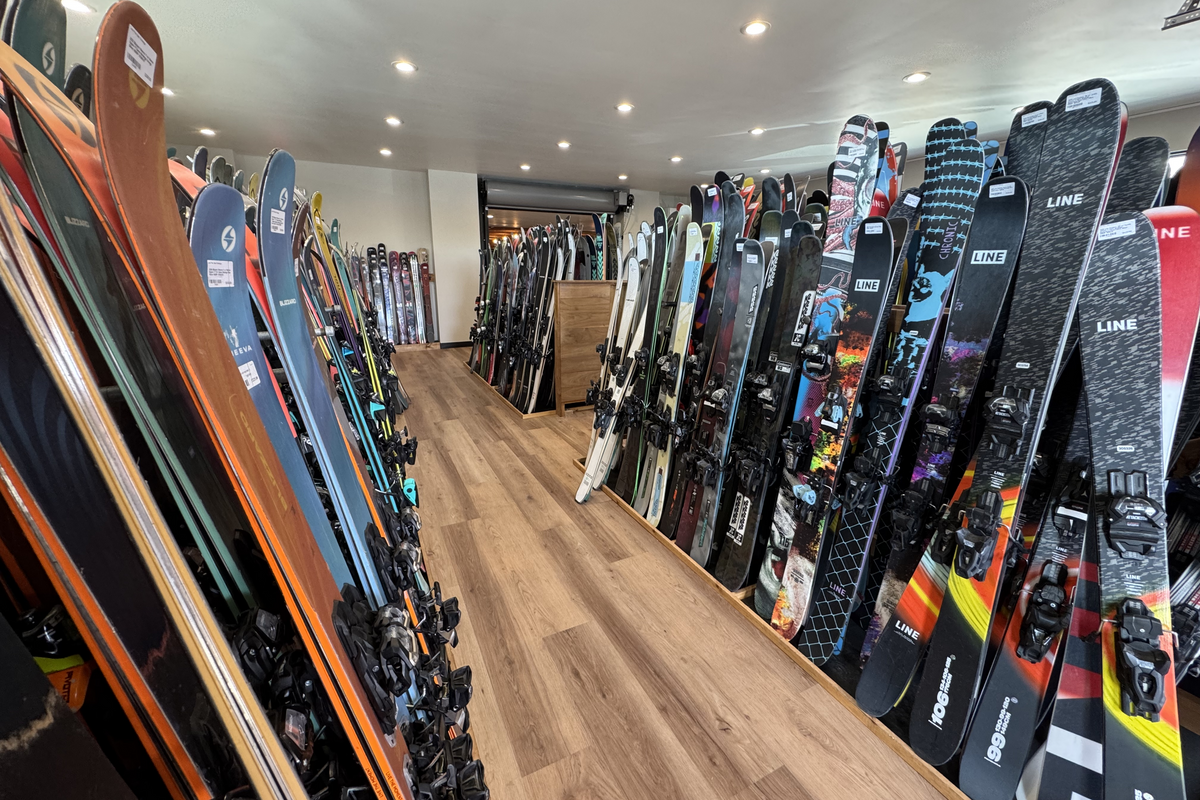
Every used ski at Lone Pine is evaluated by our team before it hits the floor.
6How many times have the skis been mounted?
Mounting bindings leaves holes, and you can’t keep drilling new ones forever.
7Are used ski bindings safe?
Bindings are safety equipment. Have them inspected and tested by a qualified ski shop before skiing on them, and tested annually.
- Binding make and model
- Approximate age (still indemnified?)
- DIN range
- Compatibility with your boots
- Enough adjustment for your boot sole length
- Plastic piece over the DIN indicator window
8How old is too old for used skis?
There’s no magic birthday when a ski suddenly becomes bad. A five-year-old ski ridden six days a year can beat a two-year-old ski that spent 100 days in the rocks.
Technology matters, and very old skis can have outdated shapes, construction or bindings. Lone Pine generally limits its selection to models from the last 5–7 years. Read: How old is too old for used skis? →
9How much should I pay for used skis?
Look up the model year and original retail price, then adjust for condition, age, mounts and bindings.
10Why buy used skis?
You’re often not buying less ski. You’re letting someone else absorb the steepest part of the depreciation.
Your used ski buying checklist
- Right ski for your height, ability and terrain
- Length and width suit where you ski
- Topsheet damage is cosmetic, not structural
- No significant unrepaired core damage on the bases
- Edges aren’t cracked, compressed or separating
- No significant delamination
- You know how many times the skis were mounted
- Your bindings can be safely mounted or adjusted
- Existing bindings are serviceable, with an appropriate DIN
- Bindings are compatible with your boot sole
- Price fits the ski’s age and condition
Or let someone else do the inspecting
Craigslist, Facebook Marketplace and ski swaps can turn up incredible finds, but you’re the buyer and the inspector. Sometimes the right answer is used. Sometimes it’s new. Sometimes it’s keeping the skis you already own for another season.
 Inspected · Ready to ride
 Inspected · Ready to ride
 Inspected · Ready to ride
 Inspected · Ready to ride
Used ski FAQ
How old is too old for used skis?
There’s no magic birthday. A five-year-old ski ridden six days a year can be in better shape than a two-year-old ski that spent 100 days hitting rocks. Judge age plus condition, binding compatibility and price together. Lone Pine generally stocks models from the last 5–7 years.
Are used skis worth buying?
Yes. Someone else has absorbed the steepest part of the depreciation, so a fixed budget often buys a higher-end ski than buying new. Check the base, edges, topsheet and bindings first, or buy from a shop that inspects its used gear.
How do I know if a used ski has a core shot?
Flip the ski over and look for base damage that goes all the way through the base material and exposes the core. A properly repaired base weld is usually fine. Deep gouges covered with dripped P-tex deserve a closer look, since water reaching a wood core is the real risk.
Can I mount new bindings on used skis?
Often, yes, as long as the new screw holes won’t interfere with existing ones. One previous mount is rarely a problem; multiple mounts need more care, especially if your boot sole length differs a lot from the previous owner’s. Ask a qualified ski technician before buying.
Are old ski bindings safe to use?
Bindings are safety equipment and should be inspected and tested by a qualified ski shop before you ski them, then tested annually. Once a model drops off the manufacturer’s indemnification list, many shops will no longer adjust, test or service it.
What is a fair price for used skis?
Look up the model year and original retail price, then adjust for condition, age, number of mounts and the state of the bindings. A nearly new ski commands more; an older ski with several mounts and bindings that need replacing should cost considerably less.
Already have skis you’re ready to replace?
Trade eligible skis toward your next pair without dealing with listings, messages, meetups or shipping them to a stranger.
A quick safety note: This guide is for general educational purposes and isn’t a substitute for an in-person inspection and binding function tests by qualified ski technicians. Used ski equipment, particularly bindings, should be inspected and tested by a qualified ski shop before use. Binding compatibility, adjustment, mounting, DIN settings and serviceability depend on the specific skier and equipment. Read our Gear Advice & Safety Disclaimer.
